Random quotes from Bill Bradley’s “Life on the Run”

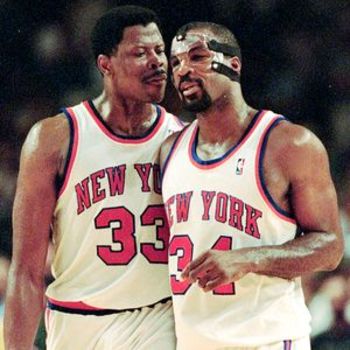
ny_greatest_knicks_07

“The money and the championships are reasons I play, but what I’m addicted to are the nights like tonight when something special happens on the court. A back-door play that comes with perfect execution at a critical time charges the crowd, but I sense an immediate transporting enthusiasm and a feeling that everything is in perfect balance.”


“But there are a few games every year when I am neither personally competitive nor in pursuit of my team ideal. I simply play for the joy of the game shooting and passing without calculation. I forget the score and sometimes go through a quarter without looking at the scoreboard. I don’t think about my movements. I feel good running and bumping, and I get an overall sense of whether we are playing well, executing intelligently and precisely, by the crispness of the passes, the timing of the plays, and the enthusiasm with which we communicate. On those enjoyable nights fatigue is a stranger.”


This a good ass read. Fa Reals.


BM

Book Review: A Coach’s Life

You don’t have to go very far down the Dr. James Naismith coaching tree to find Dean Smith’s name. Coach Smith played for Dr. Phog Allen in the 50’s, as a sparsely used reserve on the 1952 and 1953 Final Four teams. They beat St. John’s for the title in 1952 and lost in 1953 to Indiana–incidentally it would be the St. John’s head coach, Frank McGuire who would change Smith’s life almost 10 years down the road, by hiring him as an assistant at Carolina.

I am hard pressed to think of a more sincere and heart warming memoir than the one I found in A Coach’s Life.  It is rife with history and lessons, and none of it comes off as pompous or self serving (the exact opposite of what I imagine a Coach K memoir to be like). Dean Smith touched a lot of lives and thought of himself more as a teacher than just a coach.

His practices were notoriously just as precise as John Wooden’s, and there was nothing frivolous about the drills implemented into a 2 hour practice. Everything was mapped out by time of the drill, duration of the drill and the emphasis of the drill. Before practice even began Smith would lay out the “thought for the day” as well as an “emphasis for the day.” Smith and his players were well prepared before the game even tipped off, and were ready for any situation to occur during game time. In his retelling of the 1993 Championship game, Smith talks about scouting Michigan after defensive rebounds, and how they set Michigan to use all their time outs before Chris Webber would make his infamous mistake near the end of the game.

It is a great book that not only talks about events, but the reader gets some insight into coaching in the NCAA and how college basketball changed over time. Coach Smith doles out some free philosophy that doesn’t come off as advice or browbeating. You can tell he really cared about using the game to teach young men about life, and that he really cared about his players. Jerry West once remarked that former UNC players had an allegiance to Dean Smith that was almost scary.

There is a lot of wisdom to glean from this book, as the reader follows Smith from Emporia to Topeka to Lawrence, and eventually to Chapel Hill. Smith lead a long and fruitful life that inspired everyone he came across to be better people. You’ll be hard pressed to find any of your favorite players or coaches who in some way weren’t indirectly affected by some of Dean Smith’s caching innovations.

Smith popularized the run and jump trapping defense, the fist as a tired signal, the four corners offense, timeouts after baskets (in the college game), pointing at the player who gave the scorer an assist, and believe it or not, wrist bands. The reason we see players huddling up during dead balls, is because Coach Smith wanted his players to discuss the next defensive play call. Smith’s basketball philosophy was that basketball was a team sport and that if a player wanted individual recognition then he “should play golf, tennis, or run track.” Sometimes he would make players play 1 on 5 during practice just to prove his point.

Coach Smith was the ultimate coach’s son. His father was his high school basketball coach, and his mother was a teacher. Smith lettered in high school as a catcher, a point guard, and a quarterback, which seemed to only groom him to be a leader someday.

Although Dean Smith reached 11 Final Fours, including 2 national titles, 23 straight NCAA appearances, and 13 straight Sweet Sixteen visits, Smith is most proud of his players’ accomplishments, saying that “Players win games and coaches lose them.”

Smith was more invested in building relationships and molding men than his win-loss record. His memoir made me consider what it really means to have a successful season as there are three seasons in college basketball: the regular season including conference play, the conference tournament, and the national tournaments (NIT,NCAA). Considering that Smith’s initial post season runs intersected with Coach John Wooden and UCLA, it lends some serious perspective–not everyone can be the national champion, and each victory must be appreciated on its own merits.

While he was a coach, the UNC basketball team had a 95 % graduation rate, and 26 of his former players went on to be first round NBA selections in the draft (one of them being some guy named Michael Jordan).  Even the players who went on to do other things in life besides play basketball, managed to become winners in life because of the time they spent learning from Dean Smith–becoming doctors, lawyers, and senators.

I checked out A Coach’s Life from the library, read it, returned it, and then went online an ordered a copy for my personal book collection. The book is an essential to anyone who one day wants to coach, or to anyone who just loves basketball. It is unquestionably a Who’s Who for the game, as anyone who was a student of the sport came across Dean Smith in some way or another. This book is easily an A +


BM


profile pic b mick  Bobby Mickey is the alter ego of writer and poet Edward Austin Robertson. When he isn’t involved in some basketball related activity, actively looking for parties to deejay or venues to perform comedy, he can be found recording podcasts with Craig Stein at Fullsass Studios. For booking inquiries, send contact info to thisagoodassgame@gmail.com


Bay Area Renaissance?

The Golden State Warriors have been to three straight NBA Finals, and barring a slew of catastrophic events, they will be in their fourth straight finals this coming June. There is no way around it folks, we are in the midst of an NBA dynasty; and if history has shown us anything, it’s that sports dynasties are boring for everyone that exists outside of said dynasty’s fanbase.

The reason today’s basketball media jump on every morsel of locker room and organizational gossip is because there is little on the court drama to write about. The only three seasons from the 1990’s that held any drama were the ones containing a Michael Jordan sized vacuum. Today, if you’re an NBA junkie, one can glean happiness from just watching high level basketball. Up until this season’s trade deadline, it looked like all we could hope for (at best) was that a well coached team has enough firepower to at least make the Warriors work for the title.

For most part, the Warriors are destroying teams, and as of now, the teams that match up best with them are the Houston Rockets, Utah Jazz, and Boston Celtics. As of today, I believe that none of these teams have enough to beat a healthy Dubs squad in a seven game series. On some level, Golden State realizes this, and even though they are putting W’s in the win column, they haven’t been playing all that well. There haven’t been more than a dozen games where Golden State has played an entire game with the sustained intensity you would expect from a championship team.

This season a typical Warriors game looks like this: the opposing team comes out to a start that might have them up by 8 points at the end of the quarter. They may even dominate the entire second quarter as well, but at halftime one look at the scoreboard indicates the Warriors are only down by 4. Then the third quarter starts and the Warriors go on a 3 minute, 20-5 run. Then in the blink of an eye, the fourth Warriors lead is out of reach and they are emptying their bench to an applause. Occasionally, the opposing team knocks the margin back down to a single digit deficit, but two possessions later, the Warriors have hit 2 deep three pointers and its a double-digit lead again. It’s not even fair.

The Warriors don’t play focused inspired ball for 48 minutes because they don’t have to in order to win. Their roster is so deep and so talented that they can play badly for 40 minutes sandwiched between two incredible four-minute stretches, and still beat most teams by double digits. Much like the 1990’s Jordan led Bulls, these Warriors have no true rival. In the 1980’s the Lakers at least had rivalries with the 76ers, the Celtics, and finally at the end of their run, the Detroit Pistons.

On the surface, the NBA product is doing wonderfully. There are superstar faces on almost every team in the league, and new fans flock to the arenas to see the East Bay juggernaut that is Golden State. However, we are all robbed of something highly significant if the league can’t produce a team to force the Warriors to play at the highest level of basketball imaginable.

You can refer back to the 2011 Dallas Mavericks and 2014 San Antonio Spurs for examples of the competition created from the Lebron James/Chris Bosh/Dwayne Wade super team down in Miami. Those Heat teams were so good that it forced teams to play at a ridiculously high level just to have a chance to win. It is no accident that the two teams that beat the “Heatles”era in the Finals were two of the best passing teams we’ve witnessed in years. It is hard to imagine a world without either of those teams, and if we don’t see an organization step up in the 3-5 years, it will be a shame for all of those who hold NBA basketball so sacred.

Unlike the Celtics, Lakers and Heat teams from the past ten years, the initial core of Golden State’s dynasty arrived through the draft. Draymond Green (2012), Klay Thompson (2011), Steph Curry (2009), and Harrison Barnes (2012). After beating Denver in 2012 playoffs, they signed Andre Iguodala as a free agent. Then after losing the 2015 Finals to Cleveland, the Warriors essentially traded Harrison Barnes for Kevin Durant; letting Barnes go to Dallas for an enormous 94 million dollar contract, winning the title last season and securing themselves as the favorites to come out of the West for years to come.


This level of success is still relatively new for most Warriors fans, and yet, it’s no longer a novelty. The ease at which the wins come and the new brand of Warrior fandom, has created a shift  in the way the rest of the league and older NBA heads perceive the organization and people who root for the team. I’d even go as far to say there is a schism between the older blue-collar fan base of old and the “New Jack”, button up white-collar contingent.

The 1990’s was an idyllic time to live in the Bay Area. A blossoming underground hip hop scene produced some golden era classic albums. Both sides of the Bay Bridge had competitive sports teams. In baseball, the A’s and Giants were competing annual for division titles in the American and National Leagues. The 49ers held it down as the second best team in the NFL, until the Raiders ended their self-exile down in Los Angeles.

The Don Nelson-led Warriors were constantly on highlights packages for their up tempo play. Despite the flash of Run TMC  (Tim Hardaway, Chris Mullin, and Mitch Richmond), and the young talent of Chris Webber and Latrell Sprewell, the early 90’s Warriors were more sizzle than steak. After the 1993 season, Warriors fans endured fourteen lean years as they cemented themselves in basketball folklore, as the best fans in basketball. Many players and NBA execs will say that no matter how disappointing of a team the organization fielded, the stands of the “Roar-acle” stayed filled and stayed loud.

Despite having some of the flyest color schemes in the league, running into a Warriors fan was about as random as meeting someone fan rocking some Milwaukee Brewers gear (although full disclosure, I used to own a blue and gold Chris Webber jersey). Nowadays, it doesn’t matter where you go, you’re bound to see someone with a Steph Curry or  Kevin Durant jersey. In fact, I can’t recall ever meeting a Warriors fan until my first visit to Oakland during the summer of 2006.

It was at an A’s game. I met some guys my age on the BART to Oakland and we all scalped tickets together. Sometime during the game our talk turned to basketball and they went on a rant about how much they hated their roster at the time. I asked about Warriors tickets and was shocked to learn that the cheapest ticket to go watch Troy Murphy, Ike Diogu, and Mike Dunleavy Jr. usually ranged from 35-50 bucks. I couldn’t believe it.

Later that fall, after I moved to Oakland, I spent the first five months of the season clowning on my neighbors, laughing in their faces when they had the gall to invite me over to watch Warriors games at their houses. Some of these guys kept telling me how Warriors were going to make the playoffs that season and this was even before they traded for Stephen Jackson and AL Harrington. I remained skeptical. Warriors fans kept believing and it happened.

Golden State Warriors v New York Knicks

The Warriors made the playoffs as a number 8 seed and the entire East Bay was electrified. Everywhere I went I saw people selling bootleg warriors gear on the sides of the roads. Every barroom television was turned to the game and every single patron was tuned in. “We Believe” became the mantra that spring and I even found myself rooting for them against the number 1 seeded Dallas Mavericks.

The Warriors coach, Don Nelson had coincidentally been the architect of the Mavs current roster and he was playing chess while poor Avery Johnson played checkers and they upset the Mavericks (who’d had the NBA’s regular season best record) in six games. MVP, Dirk Nowitzki was so upset that he threw a trash can through the visitor locker room’s wall (Dirk would later put his signature beneath the hole).

Eventually that Warriors team lost to the Jazz in the second round, but not before Baron Davis unleashed one of the most memorable playoff dunks on Andrei Kirilenko–a dunk  that encapsulated the team’s four-month run.  Fans couldn’t know how long this run would last, but they embraced each moment.  Home games at the Oracle was must see television. You could hear the crowd through the feed, as they stood for entire stretches of games in the 4th quarters, chanting “Warriors” over and over again.

The momentum continued into the next season where the Warriors improved their win total to 48, but the Western Conference had also improved as a whole, and they missed making the playoffs by a game (marking the first time a team had won that many games without making the playoffs).

The reputation of the Warriors’ cult following which was once a whisper among NBA circles was now a national story. Tickets were virtually impossible to get if Steve Nash or Kobe Bryant came to town.The magic did not last long, however; as various parts that made the engine run were traded or let go. Stephen Jackson was traded in 2009 to the Charlotte Bobcats (remember them?) and Don Nelson would step down from coaching by the year 2010,.and The team would not win 30 games in a season again until 2012, the beginning of the Splash Brothers era.

*************************************************************************************

Various critics now point to the stands as an indicator of what is to come for the franchise when it moves across the bridge in a couple of years. The “Roar-acle” has become the “Snore-acle” as the hard-core fan base that filled up the arena night in and out during some of its most losing-est of times has given way to a bunch of wine sipping cheese eating button shirt, 80 dollar jeans wearing techie nerds– a reflection of the demographic shift that has happened in the Bay (especially the East Bay) during the last ten years.

The irony is not lost on me that ten years ago, San Franciscans could give two shits about the Warriors, or basketball in general; preferring to sniff their own farts and talk about the good old days of Joe Montana and the Niners. Now suddenly they are the demographic that is vaunted onto the public as the “Warriors faithful”. Its kind of disgusting.

I went to my first Warriors game in 2013 for game 6 of the Western Conference Semifinals also known as the ascent of the Splash Bros. era. Before that season, head coach Mark Jackson claimed that he had the best shooting backcourt in the history of the NBA. People laughed because neither Stephen Curry, nor Klay Thompson hadn’t anything yet in the league. Steph had yet to prove his ankles could hold up to the rigors of an 82 game season in the NBA, and Klay Thompson was still an unproven 2 guard out of Washington State.

By April of 2013, they had everyone’s attention. Throughout that playoff run, text messages and tweets were flying around via satellite every night about the same time. Somewhere in the third quarter of every playoff game, Steph Curry and his tender ankles, would go super nova– putting up double-digit numbers to a souped up arena. Each game held more importance in the first round against Denver, and I nearly got myself and my roommate evicted because of all the yelling I was doing at 11:45 at night central time.  By the second round of the playoffs, they had everyone’s attention.

They stole a win on the road in San Antonio, and were within a Manu Ginoboli, double overtime, game winning 3 pointer away from taking a commanding 2 game lead back to Oakland (the Warriors also blew a 16 point lead with 4 mins left in regulation). My travel plans coincided with a possible game 6 at the Oracle, so I bought myself a ticket immediately after time expired that night.

Let’s just say I wasn’t disappointed. The BART train was filled to the brim with Warriors fans, chanting at each stop until the moment we arrived at the stadium. The fans stood the entire game, and I had a splitting headache when it was all over, my ears ringing from the “Ref You Suck!”, and “Warriors!” chants.

The stage was too big for the young squad (as the game 2 results had predicted) and they couldn’t withstand a costly head injury to Harrison Barnes after a scary fall. Jarrett Jack did his best to keep the team close, and Popovich geared the game plan around making someone other than a gimpy Steph Curry beat them. Tim Duncan didn’t even play the final five minutes as Popovich went to his best small lineup.

I wore nothing to give away my Spurs fandom out of fear and respect (though as it turns out, Warriors fans aren’t quite as savage as Raiders fans), but I couldn’t have asked for a better show for my dollar. The Warriors performed well, but my favorite team won. I turned to grab my belongings, but noticed that no one in the stands had moved a muscle after the buzzer sounded. The court emptied but fans were repeatedly chanting Warriors at the top of their lungs. The moment gave me chills. Were we about to see an encore?

The entire team spilled back onto the court to a chorus of applause. Steph grabbed a microphone and addressed the crowd, expressing his thanks and sadness that the run was not over but only just beginning. I got a little teary eyed. A sax player blared his horn into the quiet evening, while fans slowly made their way to the parking lots and the BART train platform.

The smell of medical marijuana wafted my way, and I realized that I felt kind of bad for the Warriors. It was the kind of feeling I used to get after beating a really good friend in video games. They had given the Spurs a good run for their money and it felt like the Warriors were just a player or two from figuring the rest of the league out. I didn’t know it then, but they were on the upswing and the Spurs had crested a long time ago; the next two seasons for them was just a swan song for the Tim Duncan era.

And yet I was extremely happy for Warriors fans when they finally got a championship in 2015. They’d endured a lot of shit since 1976–a time-span that predated my birth, which in sports years is a really long time–almost 3 generations. They’d beaten Lebron James two out of three times in the NBA Finals, which was almost as good as the Spurs winning themselves; and it even seemed appropriate for Matt Barnes to bookend his time on the “We Believe” era Warriors to get a ring with last season’s roster.

It is hard to feel happy for this year’s Warriors team. Somehow they managed to get even deeper on their bench with the additions of Omri Casspi and Nick Young, and Jordan Bell. They have been demolishing the rest of the league without even trying. It seems like ages since the Warriors were this cute bunch of upstarts led by the amiable Steve Kerr, former Spur and coaching disciple of Lute Olson, Phil Jackson, and Greg Popovich. They aren’t even that likable this year as they lead the league in technical fouls in overall fuckery (fairly or unfairly, Kevin Durant and Draymond bear the brunt of the blame for this).

This new brand of Warriors fans shows up halfway through the first quarter, as the spectators already inside the arena sit down almost immediately upon the jumpball being won. Watching them face off against the Timberwolves back in late January, you could have told me that the Warriors fans had been replaced by Dallas Cowboys fans and I would’ve believed you.

The crowd was more reactive than engaged–only making noise when the public announcer egged them on with sound effects and the Jumbotron. Looking around the arena reminded me of the difference between OK Computer era Radiohead fans, and people who had finally discovered them after their In Rainbows album.  I wanted to say some of these people that “If you can’t handle to  if they couldn’t handle being a fan when the team was at their most Troy Murphy, then they didn’t deserve be here for their best Steph Curry”,  but that sounded silly to say out loud, and looks even sillier as I type it out.

Seeing a couple of Hardaway and Webber jerseys did make me smile though, but besides that, the collective joy at the unexpected success of the team was replaced with a smug, almost complacent vibe in the air. Unlike New York, where passengers are expected to immediately head towards their destination with purpose and clarity, these west coast commuters walk around aimlessly and lackadaisically, often stopping in the middle of the walkways for God knows why. I wish I could blame it on the Kush, but the straight-edged yuppies are the biggest offenders of failing to understand spacial awareness.

I sat and watched Golden State slice and dice the Timberwolves (a 4th seed out west mind you) with expert backdoor cuts and passing to a largely quiet audience. It was like watching an expert bullfighter slaughter a blind and anemic bull. Warriors basketball was officially boring. Minnesota would go on a run to cut the deficit to five points, and then poof, blowout city. It barely registered in my brain that Kevin Durant (once my favorite NBA player of whom I prayed would get a point guard like Curry) had a triple double.

The Warriors are bored.  The joy of winning has been lost to the everyday challenge of playing against their highest basketball selves. It is the difference between the NBA in the 80’s and the NBA in the 90’s. Magic had Bird and Bird had Magic. Jordan had no peers.

The warriors have a showmanship much like the Lakers and the Harlem Globetrotters, but without a true rival, their game suffers. The league’s only hope is the newly  revamped Cavaliers may have finally achieved a balanced roster of young athletes in Rodney Hood, Larry Nance Jr., Jordan Clarkson, and the veteran George Hill.

It is not outside of the scope of possibilities that this collection of players will make the Warriors work for their title and a place in NBA canon of dynasty franchises. The Houston Rockets won’t be a cake walk either. They have beaten the Warriors twice this season already and they also just signed “Iso” Joe Johnson off of waivers. And no one wants to see Oklahoma City in April. Stephen Adams and Russell Westbrook make you feel them even after a win. The trade deadline may have finally given NBA fans what they needed most: a little bit of suspense. Now we just have to survive the next two months of tedium before the playoffs starts. I’m just going to set my alarm for April. Wake me up if I somehow sleep through it.


BM

 

profile pic b mick  Bobby Mickey is the alter ego of writer and poet Edward Austin Robertson. When he isn’t involved in some basketball related activity, actively looking for parties to deejay or venues to perform comedy, he can be found recording podcasts with Craig Stein at Fullsass Studios. For booking inquiries, send contact info to thisagoodassgame@gmail.com


Book Review Of Hard Work

For many Kansas Jayhawks fans in April of 2003, Roy Williams leaving KU to replace Matt Doherty at North Carolina felt like insult to injury. The Jayhawks had just ended a beautiful 2 year run of Final Four finishes, but had failed to finish the job on both trips. Bad shot selection and a costly time out violation cost them in a heated game against the Juan Dixon–led Maryland Terrapins in the 2002 tournament. It was a disappointing way to end the season; especially being the first team to go undefeated in Big 12 conference play.

Despite losing two critical big men the following year (Drew Gooden to the NBA draft and Wayne Simien to a shoulder injury), the Jayhawks got back to the Final Four and almost overcame a poor first half and poor free throw shooting (they shot 11-31 from the charity stripe) only to come up short. Not only did they lose the National Championship by a mere 3 points, but they lost two of their storied players to graduation in Nick Collison and Kirk Hinrich, and on top of that they lost their head coach. It was a tender time for the KU faithful.

Hard Work puts this time period–and Roy Williams as a whole–in perspective. It is a touching and honest tale that gives us insight into what makes him tick. Williams discusses his family background growing up in Asheville, North Carolina and we follow him to his decision (inspired by his own high school coach Buddy Baldwin) to pursue a career in coaching during his junior year in high school. From there, he goes on to attend the University of North Carolina in Chapel Hill, where he plays on the junior varsity team and watches the Dean Smith run practices during his free time; sitting high in the bleachers while taking notes.

Through hard work and determination Williams pays his way through school by taking odd jobs until he finally graduates and finds a job coaching high school, while maintaining his connection at UNC–a connection that pays in dividends as he takes a pay cut to become an assistant coach for Dean Smith. It is Roy Williams who has a hand in recruiting such notable players as Rick Fox, Sam Perkins, and the GOAT himself, Michael Jordan.

After ten years of hard work for coach Dean Smith (a KU alum), that Williams leaves for Lawrence, Kansas (not without a great deal of hand wringing) after another UNC alum, Larry Brown leaves for an NBA job.

I picked up this book hoping to get some insight into the Lawrence to Chapel Hill parallel, and the coaching pipeline that started with Dean Smith. Unfortunately, Williams does little romanticizing about his time in Lawrence. It almost feels like he left Chapel Hill only for the sake of building his resume for when it was time to take over for Coach Smith. There are very little off the court details to his time in Lawrence, and I couldn’t help but wonder if taking the KU job helped him feel closer to Dean Smith and Larry Brown, having understood the culture surrounding both basketball programs.

Most of the details about his time in Lawrence involve recruiting and learning the ropes as the head coach of a major program. Although Roy Williams is a coaching legend, Hall of Famer, and one of the most decorated men to ever pick up a clipboard, there was a time when he faced a great deal of scrutiny. Despite going to two Final Fours in his first four years of coaching (Kansas was ineligible for post season play due to violations during the Larry Brown era), the media loved floating around the narrative that Roy couldn’t win the big one. No matter how talented the team, each season ended with Williams at a press conference crying into the microphone. It was an image I got used to seeing as a teenager in middle and high school.

Considering how tough it was at the time to get big time players to come to Lawrence to play basketball (players like Jason Kidd, Tayshaun Prince, Harold Minor, Thomas Hill, and Jimmy King all passed on coming to Kansas for various reasons–Larry Brown almost left the program in 1987 because he was afraid he couldn’t get big time recruits to come play there), one has to consider how well Williams performed his job as head coach at Kansas. Despite some good recruiting eras, the only Williams recruited player to come out of KU and go on to be a stud in the NBA was future Hall of Famer Paul Pierce. At their professional best, Scot Pollard, Raef LaFrentz, Jacque Vaughn, Gooden, Hinrich, and Collison (who almost went to Duke which means Carlos Boozer might have been a Jayhawk, YUK!) were really good role players. Even now as the coach of UNC, despite already having won 3 national titles (narrowly missing out on a fourth because of a Villanova buzzer beater two seasons ago), San Antonio Spur, Danny Green happens to be the best NBA player to ever play for Roy at Chapel Hill.

Before picking up this book, I wasn’t sure what to think about Roy Williams. As a kid, I couldn’t tell if his  “aw shucks” demeanor and Huckleberry Hound accent was corny or earnest. I always found his emotional press conferences endearing. Most of the time, he talked about how badly he felt for his players, and often spoke of the disappointment that he couldn’t win them a championship.  Hard Work was a revealing read however, and there is a simplicity and self awareness about Roy Williams that you don’t find with many coaches of big time programs. Many high profile coaches come off as smug, pompous and self righteous, or at their worst, fast talking hucksters and pimps.

As for his coaching, there is no doubt what kind of legacy he will leave when he finally decides to hang it up. He is not even 70 yet, but I don’t get the sense he is ready to rest on his laurels. UNC is the kind of basketball program that sells itself, and he doesn’t have to work as hard to get big time recruits to come to Chapel Hill. Years ago, I was wondering if he was close to retire from the stress of running a big time program. Now I understand that Coach Williams enjoys the challenge and its part of his competitive nature to scream and yell on the sideline as if every possession were the last. It took lots of hard work, but it feels like Roy has cracked the code, and he may win another four or five titles when its all said and done.

And for those Jayhawks fans who were upset back in 2003, it looks as if things worked out for both parties. Williams’ replacement, Bill Self has created his own legacy in Lawrence, winning 14 straight conference titles, and took KU took a title by his fifth year of coaching (defeating a talented North Carolina team in the Final Four on the way to that championship). Kansas fans can hang their hat on jump-starting the UNC program by giving them their storied coach in Dean Smith. Coach Smith returned the favor by sending pupils Larry Brown and Roy Williams back to Lawrence to keep the winning tradition alive. But if you think about it, Williams grew up in Asheville, married his wife while being a student at North Carolina, cut his teeth as a coach at Carolina, and even though his son and daughter both went to Lawrence High School; they also both attended school in Chapel Hill (his son Scott won a state title at Lawrence High and went on to play for Bill Gutheridge, while his daughter was on the UNC dance team). KU fans should have seen the move coming a mile away. Coach Williams was always a Tar Heel; he was just on loan to Kansas until the program needed him again.


BM


profile pic b mick  Bobby Mickey is the alter ego of writer and poet Edward Austin Robertson. When he isn’t involved in some basketball related activity, actively looking for parties to deejay or venues to perform comedy, he can be found recording podcasts with Craig Stein at Fullsass Studios. For booking inquiries, send contact info to thisagoodassgame@gmail.com


Rockin’ Steady: A Guide to Basketball and Cool: A Book Review

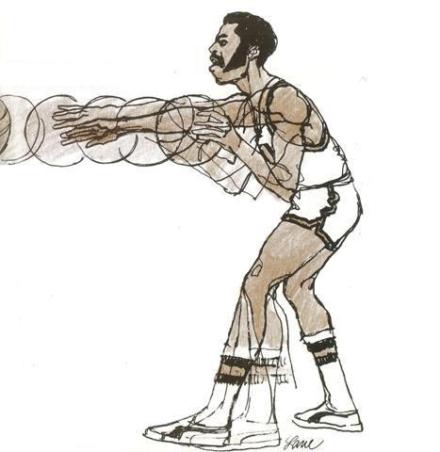
Walt “Clyde” Frazier’s words of advice for anyone who would listen was to “be different. don’t follow the crowd and leave your own footprint.” Frazier took his own advice when he teamed up with John lane (illustrations), Walter Looss Jr. (photos), and New York Times writer Ira Berkow to create one of the most entertaining and creative basketball books I’eve ever come across. 


Bill Russell writes a sincere and succinct foreword to begin the book and from there Frazier gives his readers insight into being “Clyde” and offers advice on other topics. Frazier shares his thoughts on “cool”, defense, offense, game days, and even doles out a few grooming secrets that range from hilarious to unorthodox (and possibly border on the OCD side of the game). This book even has an itemized inventory of his personal wardrobe. One of the more entertaining sections  is where Frazier gives his analytical breakdown on “vines”, romancing, getting women, and –believe it or not–catching flies.

What you will find from this read is that not only is Clyde Frazier one of the most brilliant basketball minds to have played the game (I always enjoy his analysis on MSG telecasts of the Knicks), but he is also one of the most colorful and eccentric players to come through the league. His personality shines through in his anecdotes and personal insights. Frazier didn’t hold back and the project stands out that much more because of this. If (God forbid) my place were to ever catch on fire, this book and my laptop would be the first items I’d grab before I ran out the door in my undies. It is a fun and unique read that one is hard pressed to find in any athlete written book. This book gets an A +.


By the way, in Game Seven of the 1970 NBA Finals against the Lakers, Frazier put up a 36 point, 19 assists , 7 and rebound stat line–how about that for clutch?


profile pic b mick  Bobby Mickey is the alter ego of writer and poet Edward Austin Robertson. When he isn’t involved in some basketball related activity, actively looking for parties to deejay or venues to perform comedy, he can be found recording podcasts with Craig Stein at Fullsass Studios. For booking inquiries, send contact info to thisagoodassgame@gmail.com. 


Mommy what is a Tar Heel?

Chapel Hill was dope.  Sometimes the spirit of competition and pageantry almost makes up for the hypocrisy of the NCAA and all that it represents. Chapel Hill is a must visit for any basketball aficionado, and if you go to Chapel Hill, then you may as well take the 15 minute car ride over to Durham. I spent a few hours in Dukieland (they’d lost to Virginia earlier that day) and got to see a very appropriate photography exhibit by Bill  Bamberger over at the Nasher museum on the Duke campus.

Two things worth checking out are the origins of the nickname Tar Heel and the bizarre and tragic history of the school’s various ram mascots.

The more I learn about the UNC basketball history the more it circles back to the University of Kansas. The more I learn about Michael Jordan the more things circle back to coaches Dean Smith and Roy Williams. I could spend a whole season in Chapel Hill gathering data about the role Tar Heel basketball played in the development of modern basketball. The state of North Carolina is rich in basketball history and thus, basketball is rich in North Carolina history. And if you’ve ever wondered what makes Michael Jordan the greatest ever basketball player in modern history (no disrespect to Lebron James), then just watch this series of videos I found on Youtube.

https://www.youtube.com/watch?v=RHdqi1J6mG0


https://www.youtube.com/watch?v=AYPM0Msnvnw


https://www.youtube.com/watch?v=VzxuW5vM60Y


profile pic b mick  Bobby Mickey is the alter ego of writer and poet Edward Austin Robertson. When he isn’t involved in some basketball related activity, actively looking for parties to deejay or venues to perform comedy, he can be found recording podcasts with Craig Stein at Fullsass Studios. For booking inquiries, send contact info to thisagoodassgame@gmail.com. 

Giant Steps: A Book Review


For starters, I can’t think of a more aptly chosen title than Giant Steps for the first autobiography by Kareem Abdul Jabbar. Not only was Kareem a giant among men with his 7”2 frame, but he was also a renowned jazz aficionado. Giant Steps, of course, was one of John Coltrane’s signature albums and considered in the canon of jazz records ever cut.

There is a wealth of information to cull through in this book. Now 70 years of age, Jabbar’s lifespan cuts through the most seminal time period of this country’s modern history. When you consider how Kareem’s playing career parallels the development of the country we now know, this book becomes an important document in U.S. history.

The most notable items from this autobiography are:

  • How Kareem’s Catholic upbringing affected his development as a person and a student athlete.
  • Growing up in New York (especially Harlem) during the 1950’s and 1960’s and how that affected his self-identity.
  • Playing for Jack Donohue at Power Memorial High School.
  • The culture shock he encountered while he attended UCLA during the height of “Flower Power” era.
  • Playing basketball under the tutelage of Hall of Famer, and master strategist John Wooden.
  • His religious conversion to Islam and the subsequent change of his Christian name, Lou Alcindor.
  • His disastrous first marriage (an extremely honest and vulnerable chapter).
  • His playing days in Milwaukee.
  • His perspective on the infamous “punch” by Kermit Washington to Rudy Tomjanovich’s face.
  • The trade that sent him to the Lakers and playing during the “Showtime” era.


Kareem Abdul Jabbar is your quintessential renaissance man: intellectual, one of the best athletes of all time, and add to his resume, accomplished author. This a great book and easy read (unlike his other biography, Kareem which at times felt like a long laborious affair). It feels like you are sitting underneath  Kareem’s veranda at his house in Hawaii, listening to him tell these stories over a cup of organic tea and a joint. His pen game is highly eloquent, and Jabbar has quite a keen sense of observation for the time period he came of age in, and the historic events that he lived through. This book gets a solid A+ for being so engaging and thorough.

BM


profile pic b mick  Bobby Mickey is the alter ego of writer and poet Edward Austin Robertson. When he isn’t involved in some basketball related activity, actively looking for parties to deejay or venues to perform comedy, he can be found recording podcasts with Craig Stein at Fullsass Studios. Follow him on twitter @goodassgame. For booking inquiries, send contact info to thisagoodassgame@gmail.com. 

Sacred Hoops: A Book Review


Nothing that you may have read by or about Jackson makes any sense when you consider the utter train wreck that he helped facilitate during his days as the president of team operations for the New York Knicks. In fact, it is downright puzzling to witness a man–who at one time was considered one of the greatest active minds in basketball—shit on his own legacy in such a short period of time. From his awkward attempts at running a Twitter account, to his public breakup with Lakers co-owner Jeannie Buss, to his bizarre feud with Carmelo Anthony, things have been nothing short of cringe worthy for the Zen Master.

I’ve written extensively about Phil Jackson’s coaching acumen and his basketball I.Q. when I reviewed Crazy Basketball and More Than a Game, and I felt compelled to write about him again because why not? His insistence alone on espousing the basketball purity of the “Triangle Offense” is reason enough to doubt Jackson’s reasoning. You would think that someone who believes that impermanence is a fundamental fact of life (you can’t step into the same river twice) would be able to adjust with the times. But no. Phil fucked it up for everyone, and my boy, Alex Knapp called it the very first day that the Knicks introduced Derek Fisher as the next New York head coach (wow doesn’t that seem forever ago?).

I can’t say that this book has more to offer than Maverick, or More Than a Game, it details the beginning of his coaching career, when (much like Luke Walton) his playing career was cut short by injuries. Jackson notes that sitting next to the legendary Red Holtzman during games taught him a different way of looking at the game of basketball.

Jackson talks about the development of his personal beliefs in accordance with his own basketball philosophies. Raised Pentecostal, he grew to embrace a Zen Christianity form of religion, and used that to help teach his viewpoints about basketball, invoking phrases like “Chop Wood, Carry Water”, “Don’t let anger cloud the mind”, and “awareness is everything”. 

When Phil discovered Tex Winter’s “Triple Post” Offense, he felt that it encompassed everything he wanted to teach to his basketball players, that it was a structure that could empower everyone on the floor, and that it employed the seven principles of a sound offensive strategy.

The book does a great job of taking the reader through Jackson’t time coaching in the Puerto Rican Superior League and for the CBA’s Albany Patroons, where he experimented with his lineups and personnel. He played two five man units in eight minute intervals, with the best playing five guys in the final eight minute quarter. Interestingly enough, each player was paid the exact same wage, which is something a team could only get away with in a non-NBA league back then.

It is a pretty enjoyable read, and if one can somehow forget that any of the post Lakers era stuff happened, then it is easier to read Jackson talk about the philosophy of mindfulness without a bit of cynicism creeping in. It’s hard to not laugh when reading Jackson tell a player that the “power of we is stronger than the power of me.” knowing that he made Melo’s final season as a Knick a living hell. 

I suggest that any basketball fan, or aspiring coach read this book, but to also take everything with a grain of salt. I don’t know whether to think Phil Jackson is a genius, a guru, a huckster, or a hypocrite. I can say however, that he is one of the more compelling characters to make an impact in the NBA, and this book is just another example of this fact.

B +


BM

 profile pic b mick  Bobby Mickey is the alter ego of writer and poet Edward Austin Robertson. When he isn’t involved in some basketball related activity, actively looking for parties to deejay or venues to perform comedy, he can be found recording podcasts with Craig Stein at FullsassStudios. Follow him on twitter @goodassgame. For booking inquiries, send contact info to thisagoodassgame@gmail.com


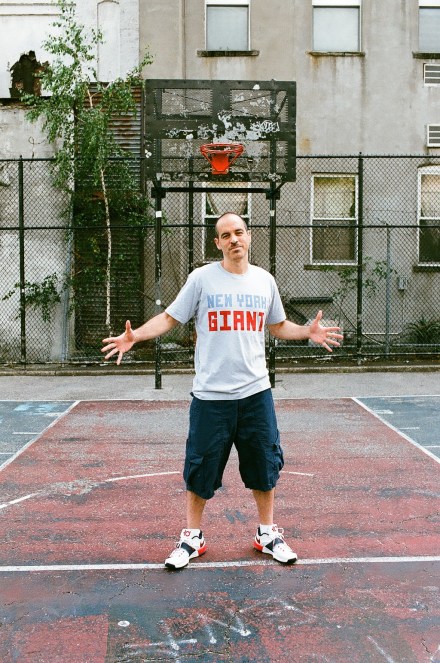
Everything is All Love With Kool Bob: My Run at the Full Court 21 NYC

You don’t have to be a basketball aficionado to have heard of the renaissance man Bobbito Garcia, AKA Kool Bob Love, AKA Bobbito the Barber. Sneakerhead, hip hop journalist and Radio DJ, the man has starred in many a documentary, and by the way, was also down with the Rock Steady Crew.

Bobbito is a New York legend, whose imprint is on many things, but the basketball world was where I had first heard of him. I first did my Googles on him about ten years ago, after watching the Gunnin’ For that No.1 Spot documentary where he emceed the first “Elite24” basketball game at Rucker Park. 

Earlier this year I came across the Stretch and Bobbito: Radio That Changed Lives documentary and it blew my mind to learn that Garcia played a pivotal role in breaking many of the hip hop acts that I still listen to today. Not too long after that I find out that he is DJ Cucumber Slice from the NBA Streets video games. Basically every hobby I’ve ever thought of having, this guy has been paid to do professionally.

Needless to say I rock with him and DJ Stretch Armstrong pretty heavy. I spent a great deal of time digging up old uploaded You Tube audio recordings of their WKCR show  from back in the day (one of the best is an episode from June of 1994 where they say that “Rockets fans can feel balls”), and of course I follow them both on Twitter.

I’d heard good things about Bobbito’s latest basketball documentary, Doin’ It in the Park and watching it got me so gassed up about hooping, that I signed myself up for his annual Full Court 21 tournament– even though I’ve been threatening to retire from playground ball for the last year or so. The dates of the tournament lined up perfectly with my visit to New York City, and though I doubted my chances of winning, I knew I had to at least compete in it. 

Continue reading

Where Have All The Tough Guys Gone?

The deeper the NBA goes into the playoffs, the more chirping you see from guys. Dudes start bumping their gums and folks get their feelings hurt, and that is when dudes wanna scrap. Things get chippy, and that is when the bitch made dudes get separated from the tough guys. Labels like “Fake Tuff Guy” get thrown around as folks get exposed for having no heart.

You’ve probably seen the “Kelly on Kelly” feud happening out on the east coast, and Kevin Durant telling the Utah mascot to “get the fuck off the court” is still fresh on people’s minds (a mere five minutes after doing Judo drills with Jazz center Rudy Gobert). I probably heard the “Fake Tuff Guy” take on Durant no less than ten times between last Saturday night and Monday evening.

Part of me agrees that KD is doing a little too much “extra”. I get it though. He’s feeling like Pac after he moved back to the west after signing with Death Row Records. Oakland has a swag about it that is hard not to adopt when you move there. You feel it in the air. You feel it in the street. You feel it when you put your hoodie on and you walk outside your door.

Is he doing too much? He probably is. “Fake Tuff Guy” though? I’m not ready to say all that. Homie grew up in the DMV, (PG County no less). I’ve driven through that area and its nothing nice. Even if he isn’t physically tough like say, a Charles Oakley; you don’t make it out of the environment KD is from by being mentally weak.

I think its important to delineate the different degrees of toughness that you see in the NBA. I respect the fight of little guys like Isaiah  Thomas and Allen Iverson just as much as someone with the physical strength of Goliath. Tough guys like Shaq and Kenyon Martin both played like complete dickheads from time to time–their behavior sometimes even bordered on bullying.

Think about it this way: there is being physically tough because you are bigger than everyone and no one in their right mind would fuck with you. But there are also those players who despite lacking in size, but played with a high pain threshold (#Kobe Tough). Sometimes being tough simply means growing up in a tough neighborhood and either fighting your way through the environment, or somehow sidestepping all the pitfalls that befall a lot of young people in that environment.

Being mentally tough is having the discipline to avoid being on the wrong block, or at the wrong party with the wrong people. You can’t make it out of the neighborhoods that people like Allen Iverson or Kevin Durant escaped by being “soft”. It’s almost disrespectful to suggest that they are.

Conversely, just because a person had a privileged upbringing with very little to worry about but school and basketball, that they are soft. Some of the toughest dudes I’ve ever  met– white, black or whatever–were guys who grew up comfortably, but their “Pops” was on their asses relentlessly to keep them from growing to be a candy ass.

As with any population, the NBA is a very diverse place. The league is full of guys with varying personalities who come from different backgrounds. I’ve put together Bobby Mickey’s tough guy spectrum” which allows us a wider range of freedom to classify who is tough and who is a “cupcake.” I’ve broken NBA players down into four main categories.


“You Better Check Your Tone ” Guys

ewingoakley_display_image

“I’m not a player I just crush a lot.”

~Big Pun

Let’s start at the top of the NBA food chain with the tough guys. These are the guys no one in their right mind would fuck with. To give you some context, think about when Ron Artest and Ben Wallace got tangled up in Detroit back in the 2004 melee. Artest is a bad dude who could play through crippling migraines and put up a 30 and 20 stat line. He grew up in Queensbridge . But he did not want anything to do with a fight with Ben Wallace, arguably the strongest man in the NBA at the time. This goes to show you that even at the top of the pyramid there is an order.

Unless a player is prepared to fight to the death, he should not pick a fight with Marcus Smart, Zach Randolph, Robin Lopez (don’t laugh I’ve heard enough rumors to be convinced that he’s crazy), Gerald Henderson (who I used to think was a fake tuff guy but I suspect he’s got hands), Matt Barnes (again, crazy), Marcin Gortat (dude looks like he could be in the Polish Mob),  David West, P.J. Tucker, Demar Derozoan   Boban Marjonovic,  Aryon Baynes, Steven Adams, The Morris twins, Metta World Peace (A.K.A. the aforementioned Ron Artest),  Udonis Haslem, Zaza Pachulia, Raymond Felton, Thomas Robinson, Demarcus Cousins, Nene (though you might get lucky and he gets injured and has to stop the fight) Tony Allen, Nikola Jokic (and that goes for any Eastern European, or anyone from Albania, the Ukraine, Serbia, or Georgia, those guys have seen some real shit) Domantas Sabonis (do you know who his dad is?) or Jusef Nurkic. Shout outs to CHARLES OAKLEY for still displaying that old man strength when James Dolan’s goons got in his face at MSG earlier this season.


The Silent Assassin 

stack5412

“Don’t pull the thang out, unless you plan to bang”

~Outkast

Don’t let the smiles fool you. These guys will fuck a dude up on general principle. They may be some of the chillest dudes on the team, but watch how quickly things go left when they feel disrespected. These guys come in different statures and sizes, but they are generally pretty down to earth, gregarious, and pleasant. They may not be physically imposing by conventional standards, but this particular kind of tough guys carries a quiet confidence.

They respect the seriousness of conflict and aren’t afraid to take it there, but they also understand that doing so can have immediate and serious consequences. Examples of this guy currently playing in the NBA are Taureen Prince, Davis Bertans (don’t sleep on them Latvians), Harrison Barnes (built like a brickhouse, and also made the Sweethearts list, but he seems like the kind of guy who once he finally got mad would go nuclear), Lebron James (he may be whiny but she is still 6’8 and strong as fuck), Avery Bradley (dude is too quiet), Dion Waiters (He and Kobe Bryant saw two different sides of Philadelphia. Don’t fall for the goofy stuff), Lance Stephenson, who people think is a joke because he has a screw loose and hams it up (don’t forget he still is from Brooklyn, and not the Gelato, fixed gear part of Brooklyn) Kemba Walker, (The last of the New York City Point Guard legends) Serge Ibaka (you see that punch he threw at Robin Lopez?), Shaun “people think we soft cuz we light-skinned” Livingston, Tarik Black, Marc Gasol, Brandon Rush and Chris “Birdman” Anderson (who people sleep on, but he looks “Get into a shootout at the Twin Peaks in Waco” crazy). 


Fake Tough Guys

kgmentality

“You ain’t a crook son. You’s just a shook one.”

~Mobb Deep

These guys are quick to get in other dudes faces, but they not tryna fight. The league fines are too stiff, and the last time an NBA player physically hit someone in the face, that  player broke their hand and missed a significant portion of the season. You’ll see these guys start something, and do a little bit of yelling at each other, until someone breaks it up because everyone knows that no one is fighting. Stock examples of this guy are:

J.R. Smith, Blake Griffin, Kevin Durant, Dahntay Jones (who would have been someone’s bitch in the 80’s and 90’s NBA), Russell Westbrook (you’ve seen the shit that he wears to the arena. Bruh is a bigger diva than Aretha Franklin #fashionista)and  Jae Crowder (J.R. Smith still hasn’t apologized to him for that season ending face smack two years ago).

I’m not saying that these guys are complete pussies. They aren’t. But I think we can all agree that they maybe their DNA more closely resembles Meek Mill than say someone like 50 Cent.


Sweethearts

image

“Can’t we all just get along?”

~Rodney King

Sweethearts just want to ball. They are not trying to start any chingaso. Only a first class dickhead would start a fight with these kind of guys. The typical response when you see  someone picking at them is “WHY are they fucking with this guy? What is wrong with them?” Good examples of the Sweetheart are Jeremy Lin, Andrew Wiggins, Ron Baker, Kristaps Porzingis, Nick “What is You Doing?” Young, Mike Miller, Harrison Barnes, Roy Hibbert, Steph Curry, Klay Thompson, Nick Collison, and of course, Dirk Nowitzki. 


L-7 Weenies

2hnywrb

“Do you love this shit? Are you high right now? Do you ever get nervous?”

~Drake


Somewhere during the course of their lives, these players crossed the threshold that separates nice guys from being p@*$#y. Sweethearts are so well liked that messing with them that speaks volumes about the agitator. The full on weenies are so pathetic because they bring trouble upon themselves. They aren’t necessarily fake tough guys, but anytime they are involved in a dust-up you think “C’mon dawg you know you ain’t gon swing on nobody. Who do you think you are fooling?” You do kinda feel sorry for them until you realize that they probably brought it on themselves with their insecurities. Sometimes these guys were just unlucky and were born with punch-able faces.

Currently the best examples are Kelly OlynyckJerryd Bayless (light-skinned dudes am I right??), Matthew Dellavedova, Austin Rivers, Chandler Parsons, Sam Dekker (who had the face of a trust fund kid before he got into the league) Kevin Love, Paul George,  Aaron and Andrew Harrison (busters), James Harden, Enes Kantner, Kyle SinglerJames Harden, and Meyers Leonard who looks like the kind of guy who sold Adderall out of his briefcase while he was in college. 

The universe is constantly in flux. Things change constantly from day-to-day, game to game, and season to season. Every NBA sequence brings with it the chance to get exposed by someone bigger, faster, and younger. One never knows what can happen and going from being a stud to being washed can happen in the blink of an eye. I created this spectrum not to diss or slander any NBA players, but to illustrate how labels easily stick even if they aren’t entirely accurate. The truth is that the traits that we think make us “brave” are pretty nebulous. We can really only be as tough as the circumstances we fight through.

BM

profile pic b mick  Bobby Mickey is the alter ego of writer and poet Edward Austin Robertson. When he isn’t involved in some basketball related activity, actively looking for parties to deejay or venues to perform comedy, he can be found recording podcasts with Craig Stein at Fullsass Studios. Follow him on twitter @clickpicka79. For booking inquiries, send contact info to thisagoodassgame@gmail.com.